You Can't Unsip It: Why Returning Home From Taipei Ruins American Coffee Forever
It starts a few days after you land back in the States. You walk into your usual spot — the one you liked fine before you left — order your regular, and sit down. The coffee is... okay. The chair is uncomfortable in that way you never noticed before. Someone calls out a name every forty-five seconds. A playlist nobody chose is playing too loud. You check your watch. You feel vaguely like you should be doing something, even though you just sat down.
You're not jet-lagged anymore. You're Taipei-lagged. And there's no known cure.
Anyone who has spent real time in Taipei's café scene — not just grabbing a quick cup near the hotel, but actually settling into the rhythm of it — comes home carrying something they didn't pack. It's not nostalgia exactly. It's more like a recalibration. A new baseline for what a café is supposed to feel like, and a growing awareness of how far most American coffee shops fall short of it.
What Taipei Actually Did to You
To understand the shift, you have to understand what Taipei's cafés are offering that most American spots aren't. It isn't just better beans, though the coffee often is genuinely excellent. It isn't the aesthetics, though the interiors tend to be more considered. It's something harder to name — a kind of intentionality that runs through the whole experience.
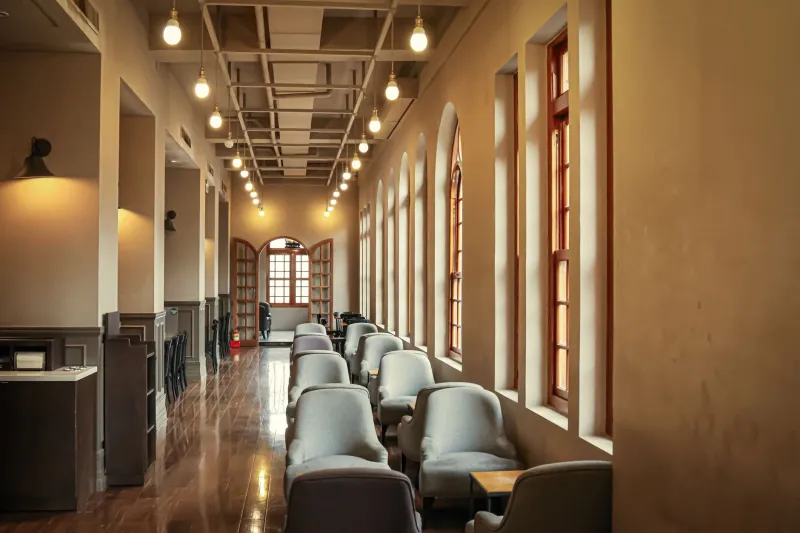
In Taipei, a café feels like it was built for the person sitting in it. Seating is designed to make you comfortable for an hour, not to encourage turnover. The barista who hands you your cup has usually thought carefully about how it's made. There's often no ambient pressure — no one hovering, no passive-aggressive "are you still working on that?" energy. The place just... lets you be there.
That feeling accumulates over days and weeks. And when it's gone, you notice.
The Specific Things You Start Resenting
Ask any American who's come back from an extended Taipei stay what bothers them most, and you'll get a surprisingly consistent list.
The noise is usually first. American coffee shops, especially chains, have acoustics that seem almost designed to prevent conversation or concentration. The espresso machine, the background music, the ambient chatter — it blends into a kind of productive-sounding chaos that we've normalized. After Taipei, where even busy cafés tend to have a more settled sonic atmosphere, it hits differently.
Then there's the seating situation. The grab-a-table-before-someone-else-does scramble, the wobbly stools, the communal tables where nobody actually communes. In Taipei, the physical setup of a café tends to signal that you're welcome to stay. In America, it often signals the opposite.
And then there's the coffee itself. Not every Taipei café is serving world-class specialty coffee — plenty of spots are perfectly ordinary. But the floor is higher. The average cup you encounter just walking around Da'an or Zhongshan is genuinely good in a way that's hard to replicate at your neighborhood chain back home.
It's Not Just About the Drink
Here's the part that takes a while to articulate: the Taipei café experience isn't primarily about coffee. It's about what the café represents in the city's social fabric.
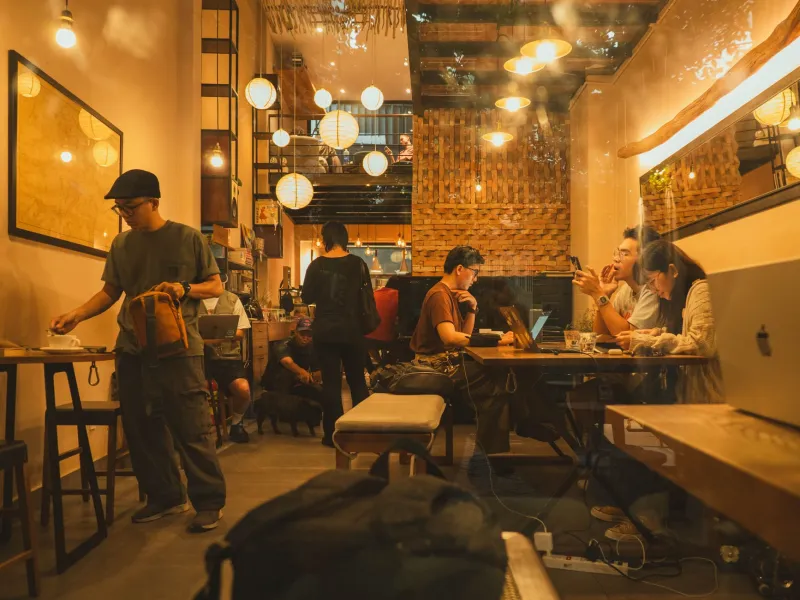
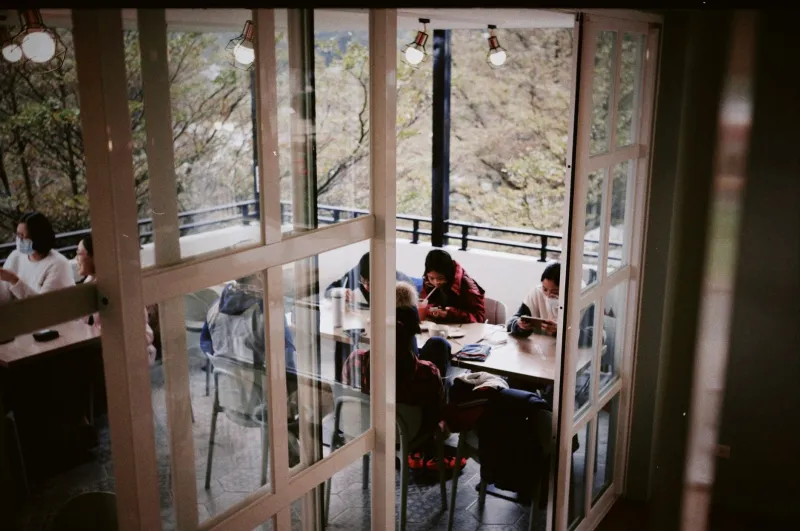
In Taipei, cafés function as a kind of third space in the truest sense — not home, not work, but somewhere in between that belongs to everyone and no one. People meet there for actual conversations. They work without apologizing for it. They sit alone without feeling weird about it. The café is woven into daily life in a way that feels organic rather than transactional.
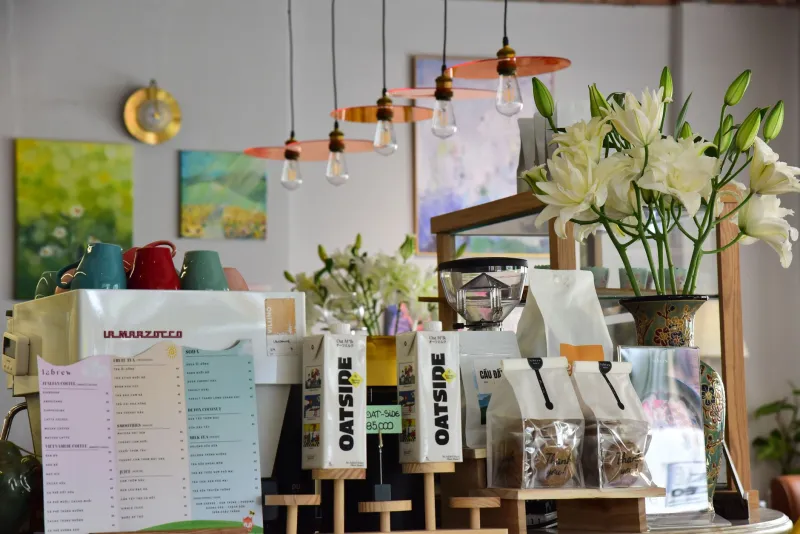
American café culture, for all its growth over the past two decades, still often feels like it's performing community rather than actually providing it. The chalkboard with the locally-sourced bean origin. The exposed brick. The branded tote bags. The vibe is there. The substance is harder to find.
Coming home from Taipei, you start to see the performance more clearly. And it's a little deflating.
The Grief Nobody Talks About
Travel writers talk a lot about culture shock going in — the unfamiliarity, the navigation, the language barrier. Almost nobody talks about reverse culture shock coming home. But for people who've spent meaningful time in Taipei's café scene, it's real.
There's a specific kind of low-grade disappointment that sets in when you realize your city doesn't have a version of that place you loved in Yongkang or Xinyi. When you try to explain to friends what made it different and watch their eyes glaze over. When you catch yourself googling "Taiwanese coffee beans" at midnight because you're trying to reconstruct something that can't quite be reconstructed.
It's not that American cafés are bad. It's that you now know they could be more — and that the gap between what they are and what they could be is a choice, not an inevitability.
What the Gap Actually Reveals
The Taipei café experience holds up a mirror to American coffee culture, and the reflection is uncomfortable. We've optimized our coffee shops for throughput, for Instagram moments, for the appearance of community without the friction that real community requires. We've built spaces that accommodate people without actually welcoming them.
Taipei's cafés, at their best, do something different. They treat the act of sitting down with a cup of coffee as genuinely worthwhile — not as a pit stop, not as a content opportunity, but as a thing worth doing well and slowly. That philosophy shapes everything from the furniture to the foam on your latte.
When you come home having internalized that philosophy, American café culture starts to feel like it's running a slightly different program. Not wrong, exactly. Just... less.
So What Do You Do With That?
Most people who go through this eventually find their way to one of a few outcomes. Some become evangelists — dragging friends to the one specialty spot in their city that gets closest to what they experienced, forwarding articles about Taiwanese coffee, talking about Taipei at dinner parties until people start avoiding them.
Some channel it into home brewing, sourcing Taiwanese beans online and building a pour-over setup that lets them reconstruct at least the sensory part of the experience. It's not the same, but it's something.
And some just... go back. Book another ticket to Taipei, tell themselves it's for a different reason, and spend two weeks sitting in cafés and remembering what it felt like to have nowhere to be.
That's probably the most honest response. The Taipei café effect doesn't really wear off. It just teaches you what you're missing — and occasionally, what's worth going back for.