Seats That Stay Full: What Taipei's Cafés Figured Out That American Coffee Shops Never Did
Somewhere between the drive-through window and the mobile order pickup shelf, American coffee culture quietly gave up on something. It gave up on the idea that a coffee shop should be a place where people actually want to stay.
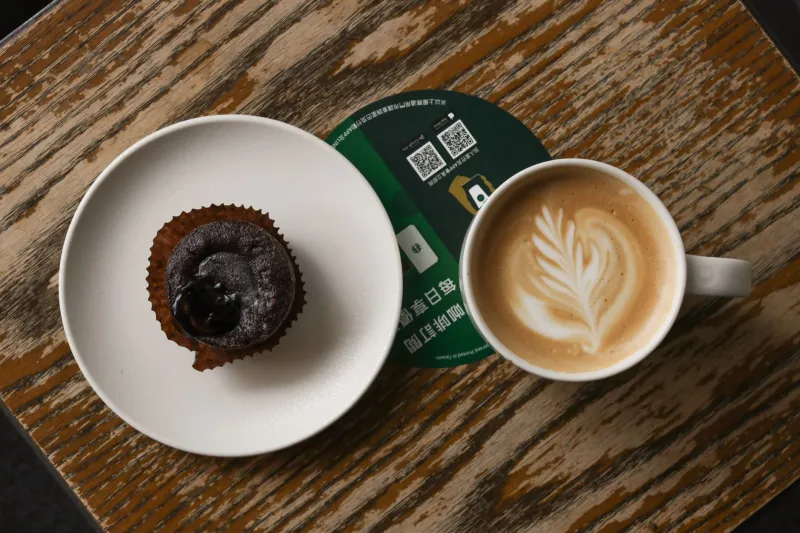
Walk into a Starbucks in suburban Ohio or downtown Dallas on a Tuesday afternoon and you'll find a specific kind of energy: transactional, hurried, slightly anxious. People are waiting for their name to be called. They're glancing at their phones. The music is too loud for conversation and the seating is just uncomfortable enough to discourage settling in. The whole space, whether intentionally or not, has been optimized for throughput. Get them in, get them caffeinated, get them out.
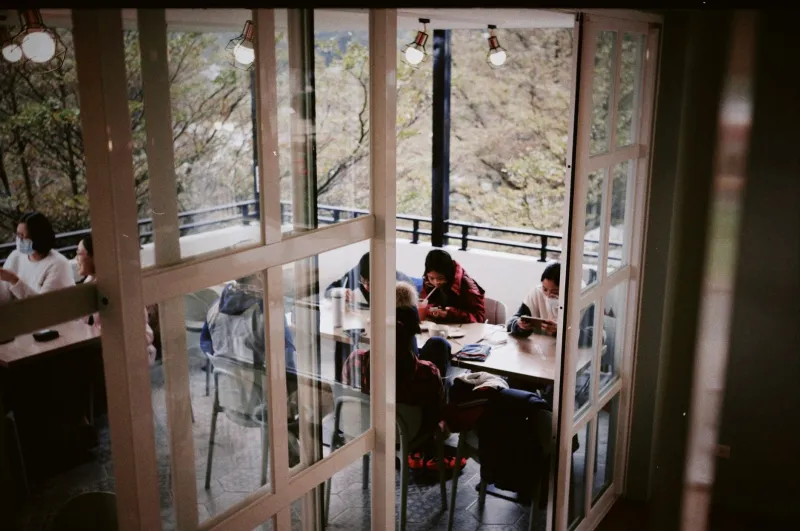
Now fly fourteen hours to Taipei and walk into almost any independent café in Da'an, Zhongshan, or Wenshan on the same Tuesday afternoon. The vibe is almost the opposite. People are reading. Working, yes, but slowly. Having actual conversations. Sitting with empty cups they haven't been asked to clear. Nobody looks like they're in a rush to be somewhere else, because for a lot of them, this is exactly where they want to be.
So what's actually going on here? And why does it matter to anyone back in the US?
The Third Place Problem America Never Solved
Urban sociologist Ray Oldenburg coined the term "third place" back in the 1980s — the idea that healthy communities need spaces that are neither home nor work, where people can gather informally without a specific agenda. Barbershops, diners, neighborhood bars, front stoops. Places where belonging is the whole point.
America once had these. Then strip malls happened. Then car culture. Then the internet. The third place eroded, and coffee chains swooped in to fill the gap — or at least to market themselves as filling it. Starbucks famously positioned itself as a third place in the early 2000s. It was a compelling pitch. It just never quite worked in practice.
The problem is structural. American coffee chains are publicly traded companies or franchise operations with investors to answer to. Every square foot of seating is a square foot that isn't generating revenue. The incentive to make you comfortable enough to stay is always fighting against the incentive to turn that table. And the incentive to turn the table usually wins.
Taipei's café scene operates on different math.
Small Footprints, Long Stays, and a Different Definition of Success
Most of the cafés that define Taipei's coffee culture are small, independent, and privately owned. They're not answering to shareholders. The owner is often behind the bar. And the measure of a good day isn't always how many cups got sold — it's whether the place felt alive.
This sounds romantic, but it's also just practical economics in a different context. Rent in many of Taipei's residential neighborhoods is manageable enough that a café with 20 seats and a loyal regular base can actually survive without relentless table turnover. The business model allows for — even depends on — people staying a while. Regulars who come in three times a week and sit for two hours are the whole point.
That changes everything about how the space gets designed, how the staff interacts with customers, and what the ambient atmosphere feels like.
Design That Invites You In Instead of Moving You Along
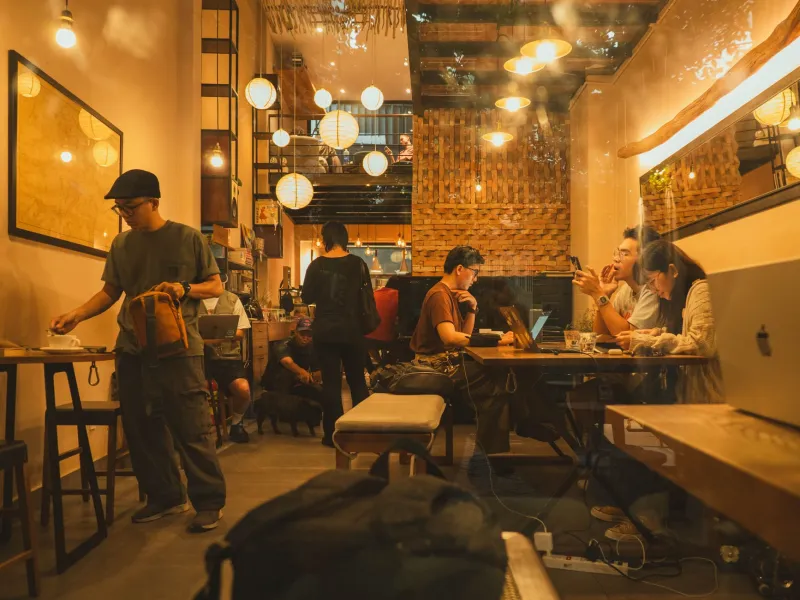
Spend any time visiting cafés across Taipei's neighborhoods and you start noticing patterns in how the spaces are built. Seating is almost always varied — some high stools at a bar, some low couches, some standard tables, often a window bench or two. There's an understanding that different people want different things from the same space at different times.
Lighting tends toward warm and dim rather than the fluorescent brightness that characterizes so many American chains (bright lighting, it turns out, increases the pace at which people eat and drink and leave — fast food restaurants have known this for decades). Bookshelves appear constantly, stocked with a mix of design magazines, novels, and photography books that actually get touched. Music, when it plays, is calibrated to conversation rather than competition with it.
None of this is accidental. Taipei's café owners are, in many cases, deeply intentional about atmosphere in a way that goes beyond choosing a paint color. The space is understood as a social infrastructure project as much as a business.
The Cultural Permission to Simply Exist
There's something else at work that's harder to design for: cultural permission.
In the US, there's an unspoken anxiety that comes with sitting in a coffee shop for more than an hour without buying something else. You feel the eyes of the staff. You wonder if you're taking up space someone else needs. You buy a second drink you don't really want just to justify your presence.
In Taipei, that pressure is largely absent. Once you've bought your coffee, you've earned your seat for as long as you want it. Nobody is going to ask you to move. Nobody is going to make you feel like a squatter. The social contract is different: the café is a place to be, not just a place to pass through.
This isn't just politeness. It reflects a broader cultural attitude toward public space and shared time that Taiwanese society has cultivated in ways that American consumer culture has largely abandoned.
What American Entrepreneurs Could Actually Take From This
The honest answer is that you can't just copy a Taipei café and drop it into an American city and expect the same results. The economics are different. The real estate market is different. The regulatory environment is different. The cultural context is profoundly different.
But there are things that translate.
The commitment to genuine design over branded aesthetic is one. Many of Taipei's best cafés look nothing like each other — they're not working from a corporate playbook — but they all share an attention to how the space actually feels to sit in for an extended period. That's learnable.
The willingness to build a business around regulars rather than foot traffic is another. American independent café owners who've found sustainable success often talk about the same thing: knowing your customers' names, curating an atmosphere that specific people will come back to, building a community rather than chasing volume.
And the hardest one: letting people stay. Trusting that a seat that's occupied by a happy regular is more valuable long-term than a seat that turns over five times in an afternoon.
The Proof Is in the Staying
The next time you're in Taipei — or thinking about going — pay attention not just to what's in your cup but to who's around you and how long they've been there. The older man with the newspaper who's clearly been in the same corner chair for three hours. The two friends who look like they've lost all track of time. The solo traveler who came in for a quick coffee and somehow never left.
That's not inefficiency. That's the whole thing working exactly as intended.
America built drive-throughs and called it coffee culture. Taipei built living rooms open to the whole neighborhood and called them cafés. The difference in outcome shouldn't surprise anyone.