Not Just Coffee: How Taipei's Cafés Became the Community Centers America Forgot to Build
Walk into a Starbucks in, say, downtown Chicago or midtown Manhattan on a Tuesday morning and you'll notice a particular kind of choreography. People shuffle forward in line, eyes on phones, recite their orders with practiced efficiency, grab their cups, and leave. Maybe a few people are parked at a table with laptops, headphones in, a universal signal that says do not approach. The whole system is optimized for one thing: moving product.
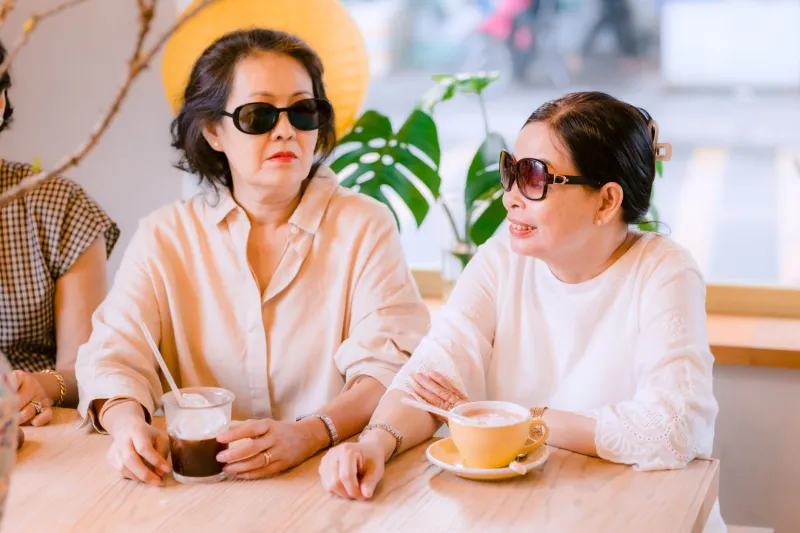
Now walk into almost any independent café in Taipei's Da'an or Zhongshan districts. The pace is different. People are actually talking to each other — not just the friends they came with, but the barista, the person at the next table, sometimes even a total stranger who complimented their laptop sticker. Nobody seems to be in a hurry to leave. And somehow, nobody's making anyone feel guilty about that.
This isn't an accident. It's infrastructure.
The Third Space Problem in America
Urban sociologist Ray Oldenburg coined the term "third place" back in the 1980s — the idea that healthy communities need spaces that aren't home (first place) or work (second place), but somewhere in between. Somewhere you can show up without an agenda, encounter people outside your usual circle, and just exist in public without spending a lot of money to do it.
America used to have these. Diners, barbershops, neighborhood bars, public parks with actual benches. Over the decades, a combination of car-centric design, commercial real estate pressure, and the relentless optimization of retail spaces gradually eroded a lot of them. Coffee chains stepped into the gap — and to their credit, they did create something. But the business model was never really built around lingering. It was built around volume.
Taipei took a different path. And a lot of it has to do with how the city's café owners think about what they're actually selling.
What Taipei Café Owners Actually Optimize For
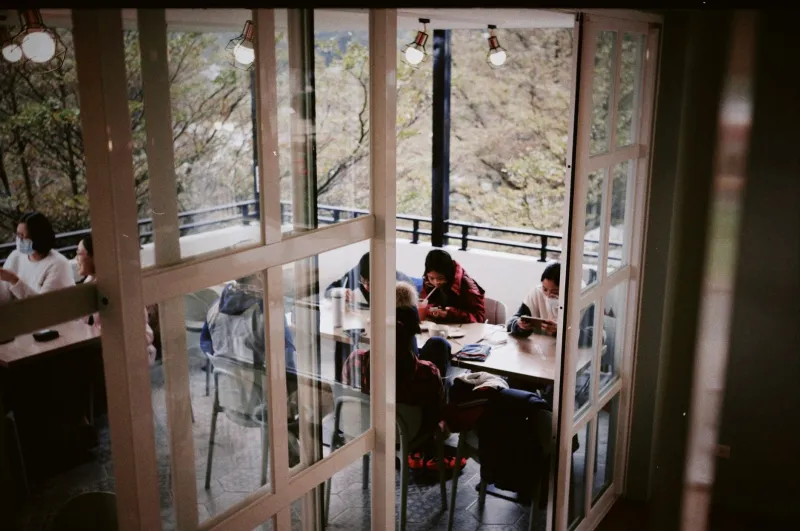
Spend time talking to the people running independent cafés in Taipei and a few things come up again and again. They talk about atmosphere the way American shop owners talk about margins. They obsess over seating arrangements — not to maximize covers, but to create different zones where different kinds of social interaction can happen naturally. A long communal table near the window. A couple of small two-tops tucked into a corner. A counter with bar stools facing the street.
They also think a lot about pace. Many Taipei cafés operate on a minimum-order model rather than a time limit — you buy a coffee, maybe a snack, and you're welcome to stay as long as you like. There's no ambient pressure to order again or free up your table. The transaction happens once, cleanly, and then you're a guest.
This shifts the entire social dynamic. When you're not worried about overstaying your welcome, you relax. You look up from your screen. You notice the person next to you. Sometimes you talk to them.
Regulars as Social Glue
One of the most striking things about Taipei's café culture is how quickly strangers become regulars and regulars become something closer to community. It's not unusual for a barista to know not just your usual order but your job situation, your relationship status, whether your mom's health has improved. This isn't nosiness — it's the natural result of people returning to the same place, week after week, in an environment that actually encourages conversation.
In a lot of American cities, that kind of familiarity has become rare enough to feel almost exotic. We've built lives where we can go days without a single unscripted human interaction. Taipei's cafés push back against that, gently, just by being the kind of place where you might end up chatting for twenty minutes with someone you've never met before.
Business relationships form this way too. Freelancers meet potential clients. Artists find collaborators. Job leads get passed across tables. It's not networking in the formal, business-card-swapping sense — it's just what happens when you put people in a comfortable room and let them be human.
Design That Invites, Not Churns
The physical design of Taipei's cafés does a lot of heavy lifting here. Many of them are genuinely beautiful spaces — not in the aggressively Instagrammable way that some American coffee shops have adopted as a marketing strategy, but in a way that feels considered and livable. Natural light. Plants. Materials that age well. Music at a volume where you can actually hold a conversation.
There's also a notable lack of the design choices that American chains use to subtly discourage lingering: hard chairs, bright overhead lighting, counters angled toward the exit. Taipei's independent cafés tend to feel like spaces someone actually thought about inhabiting for hours, because they did.
Urban designers in the US have started paying attention to this. There's growing academic and policy interest in what makes third spaces work — and Taipei's café model keeps coming up as an example worth studying. The ingredients aren't complicated: comfortable seating, reasonable noise levels, a business model that doesn't penalize you for staying, and a culture that normalizes being in public without a specific purpose.
What We Could Borrow
None of this requires a flight to Taiwan to replicate, at least in theory. Some American cities are already experimenting with it. Independent coffee shops in Portland, Austin, and parts of Brooklyn have started leaning into the third-space model more deliberately — longer hours, more flexible seating, a vibe that says stay a while rather than we need your table.
But it's hard to do in a culture that's still fundamentally organized around productivity and consumption. The unspoken contract in most American coffee shops is: you pay, you get your drink, you use the space to work or meet someone, and then you leave. Sitting somewhere for three hours without a clear purpose still feels vaguely transgressive in a way it simply doesn't in Taipei.
Changing that is partly about design, partly about business models, and partly about culture — which is the hardest thing to engineer. Taipei didn't build its café community by following a playbook. It evolved over decades, shaped by density, by a culture that values hospitality, and by café owners who genuinely seemed to care whether their customers felt at home.
The Longer Cup
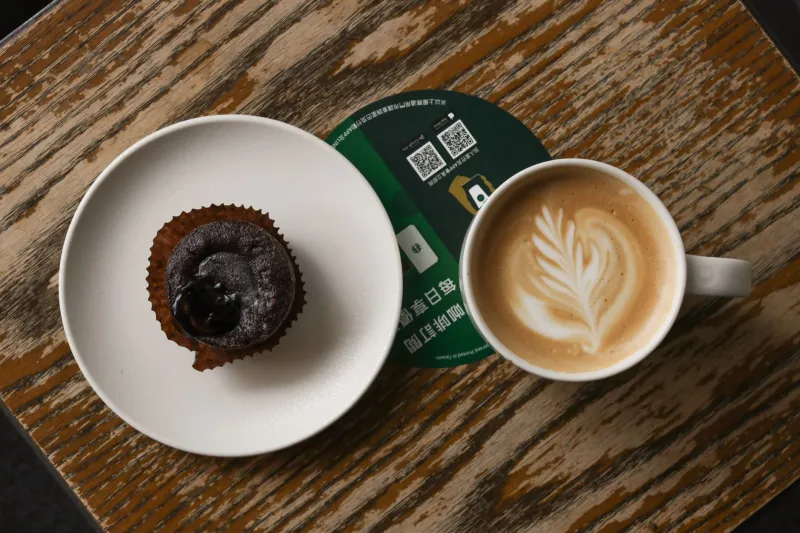
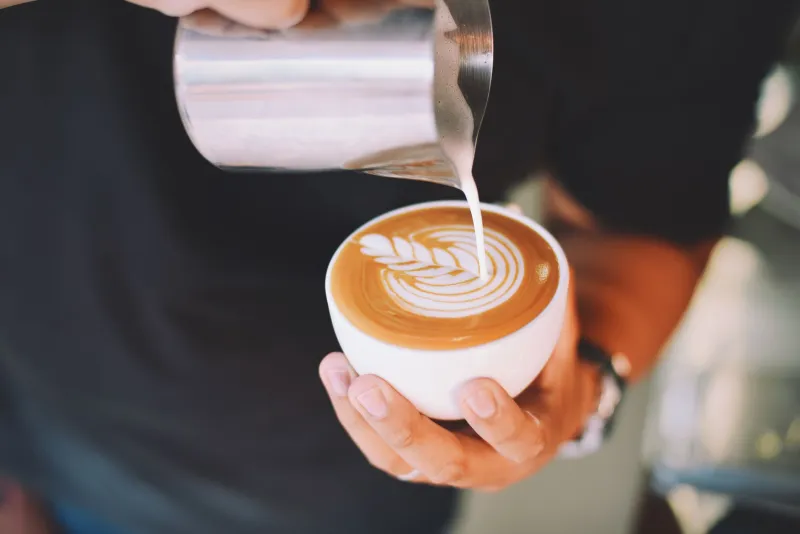
If there's one thing Taipei's cafés can teach American coffee culture, it's that the cup itself is almost beside the point. The coffee matters — and Taipei's specialty coffee scene has gotten seriously good — but the reason people come back isn't the pour-over technique. It's the feeling of being somewhere that was built for humans, not transactions.
That's a harder thing to bottle than a single-origin Ethiopian. But it might be the most valuable thing Taipei's café culture has figured out.