Track Every Sip: How to Turn Your Taipei Café Crawl Into a Keepsake You'll Actually Use
You remember the coffee. You don't remember the name of the place. Sound familiar?
It's one of the most common complaints among first-time visitors to Taipei's café scene. The city has somewhere north of a thousand independent coffee shops—some tucked into alleys in Da'an, others hiding behind unmarked doors in Zhongshan—and after a few days of hopping between them, the memories start to blur. That incredible washed Ethiopian you had on Tuesday? It could have been three different places.
Instagram helps, sort of. But a grid of aesthetically lit latte photos doesn't tell you whether the espresso was too bright, whether the seating was comfortable enough to stay two hours, or whether you'd actually want to go back. For travelers who take their coffee seriously, there's a better way to document the experience—one that turns your Taipei trip into something closer to a genuine pilgrimage than a passive scroll.
Start With a Simple Rating Framework
Before you walk into your first café, spend ten minutes building a personal rating system. Nothing elaborate—just a handful of criteria that matter to you. Coffee quality is the obvious one, but consider adding things like atmosphere, service warmth, brew method variety, and what you'd call the "stay factor"—how much the space made you want to linger.
A five-point scale works fine, but some travelers prefer a simpler three-tier approach: Would Not Return, Would Return If Nearby, and Would Go Out of My Way For. The specifics matter less than the consistency. Using the same rubric across every visit makes your notes actually comparable when you're flipping back through them at the end of the trip.
One practical tip: decide in advance whether you're rating the coffee in isolation or the overall experience. Taipei has plenty of spots where the design is stunning and the brew is mediocre—and a few where the space is nothing special but the barista's technique is genuinely world-class. Knowing which you're measuring keeps your notes honest.
The Physical Journal Still Wins
Yes, there are apps for this. Beanconqueror, Roam Research, even a well-structured Notes folder on your phone can technically do the job. But for a trip like this, there's a real argument for going analog.
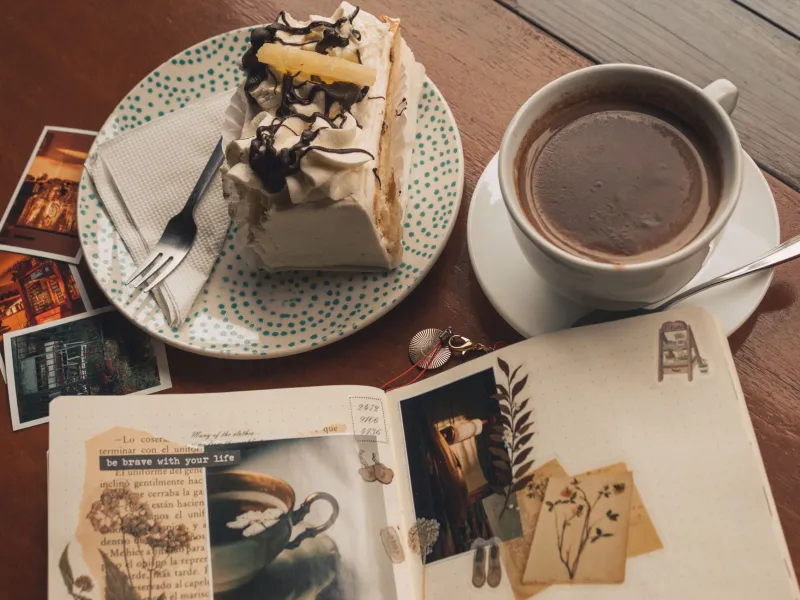
A small notebook—something pocket-sized that fits alongside your passport—becomes part of the ritual. You write the café name, the date, what you ordered, a quick sentence about the space, and your ratings. Takes about two minutes. By the end of a week, you've got a handwritten record of twenty-plus visits that's genuinely yours in a way a database entry never quite is.
Taipei's stationery culture makes this even easier to lean into. Shops like Eslite and a handful of independent paper stores in the Yongkang Street area carry beautiful notebooks that feel right at home in a slow-coffee context. Picking one up on day one gives the whole project a sense of intentionality.
Build a Living Coffee Map
Documentation is most useful when it's spatial. A list of café names is fine; knowing where they sit relative to each other transforms the way you move through the city.
Google Maps lets you create custom maps with color-coded pins, which is genuinely useful here. Before you leave home, set up a map titled something like "Taipei Coffee" and start adding spots from your research. Color one set of pins for places you want to try, another for places you've visited, and a third—maybe gold—for the ones that genuinely impressed you.
As the trip progresses, that map becomes a real-time picture of your coffee geography. You start to notice patterns: maybe you keep gravitating toward the low-key spots in Gongguan, or maybe the highest-rated cups on your list are all within walking distance of each other in Xinyi. The map stops being a planning tool and starts being a record of how you actually experienced the city.
When you get home, export it or screenshot it. It's a more meaningful souvenir than most things you'd buy at the airport.
Collect the Physical Evidence
Many of Taipei's better independent cafés print their own business cards, stamp loyalty cards, or hand out small menus with the day's brew options listed. These are worth keeping.
A slim envelope tucked into the back of your journal works perfectly for this. Over a week, you'll accumulate a small archive of paper ephemera—a menu that listed the farm elevation of a Yunnanese natural process, a card with a hand-drawn map to a hidden second location, a receipt with a barista's handwritten recommendation for next time. None of it weighs anything. All of it adds texture to the memory.
If you're the type who journals at all, these physical pieces give you something to paste in later, turning your notes into something closer to a travel zine than a simple log.
Write One Sentence You'll Actually Remember
Here's the discipline that separates a useful café journal from a pile of ratings: after every visit, write one sentence that captures something specific—not just "good coffee" but something you'd actually be able to recall six months from now.
"The barista explained the fermentation process for ten minutes without being asked and it was the best ten minutes of the trip."
"Outdoor seating on a narrow lane, a cat sleeping on the chair next to me, the best cold brew I've had outside of a competition setting."
"Gorgeous space, every table taken by someone on a laptop, the espresso tasted like it was made an hour ago."
These one-liners are what you'll actually quote when someone asks you where to go in Taipei. They're also what makes the journal worth rereading.
The Payoff: A Resource, Not Just a Memory
The real value of all this effort shows up later. Not on the plane home, not even in the first few weeks back—but the next time someone you know is heading to Taipei and asks for recommendations.
Instead of vaguely gesturing at a few names you half-remember, you open the map, scan the gold pins, and give them something specific. This place in Da'an does a Taiwanese high mountain pour-over that's worth the detour. This spot near Zhongshan Station is perfect if they want to spend a full morning working and drinking good coffee. Real information, grounded in actual experience.
That's the thing about treating a café crawl as a pilgrimage rather than a passive activity: you come home with something that keeps giving. The coffee was great in the moment. The record of it is useful for years.
Taipei's café scene rewards this kind of attention. The city has put genuine thought into its coffee culture, and the least you can do is show up ready to pay attention back.