From Cloud-Covered Slopes to Your Cup: Following Taipei's Specialty Coffee All the Way Back to the Source
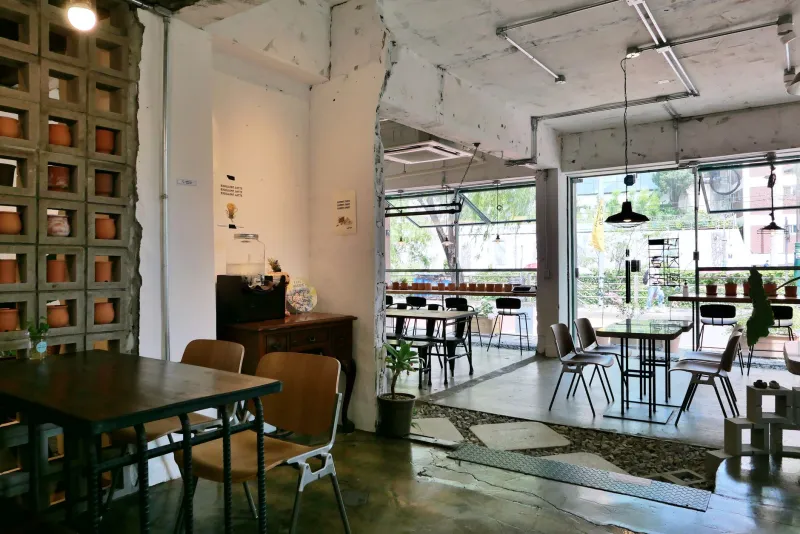
You're sitting at a café counter somewhere in Da'an or Zhongshan, watching a barista weigh out a dose of single-origin beans with the kind of concentration usually reserved for surgery. You notice the bag on the shelf behind them. It says something like "Alishan, 1,400m, washed process, harvest December." You think: that's a lot of information for a bag of coffee. And then you take a sip and you kind of get it.
Taipei's specialty coffee scene has spent the last decade building something unusual — a city-to-farm relationship that's unusually tight for a place that isn't itself a coffee-growing region. The beans behind those carefully labeled bags often come from farms just a few hours south, grown in conditions that rival the world's most celebrated coffee-producing regions. Understanding that chain doesn't just make you sound knowledgeable. It fundamentally changes how the coffee tastes.
The Geography That Makes It All Possible
Taiwan isn't a name that comes up immediately in American conversations about great coffee origins. Ethiopia, Colombia, Guatemala — sure. But Taiwan has been growing coffee since the Japanese colonial period in the late 19th century, and the country's central mountain range turns out to be quietly excellent for it.
The key is elevation. Many of Taiwan's coffee-growing areas sit between 800 and 1,600 meters above sea level. At those heights, cooler temperatures slow the development of the coffee cherry, allowing sugars to build up more gradually. The result is a cup that tends toward sweetness and complexity rather than flat bitterness. Add in the island's volcanic soil and its distinct wet and dry seasons, and you've got the kind of terroir that specialty roasters get genuinely excited about.
Alishan, in Chiayi County, is probably the name Americans are most likely to encounter on café menus in Taipei. It's a region better known in the US for its oolong tea, but its coffee has been quietly earning serious attention. Other growing areas — parts of Nantou County, sections of the east coast near Hualien and Taitung — each bring their own flavor profiles to the table.
The Farmers Behind the Beans
What makes Taipei's coffee supply chain genuinely interesting isn't just the geography. It's the relationships.
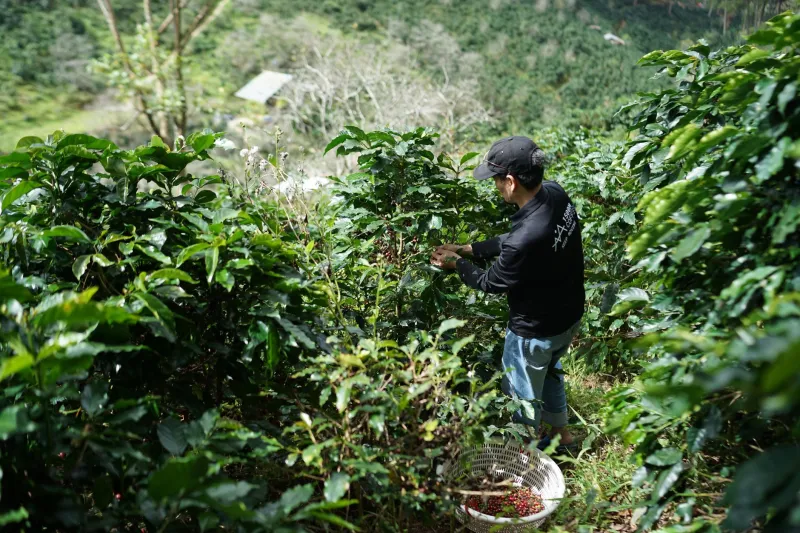
Many of the city's better specialty cafés have built direct connections with the farmers growing their beans. This isn't just a marketing talking point — it's logistically easier in Taiwan than it would be for a US café sourcing from Central America. A café owner in Taipei can drive to Alishan in three hours. They can meet the farmer, taste through the harvest, and select the lots they want. Some do this every single season.
Those relationships have real consequences for quality. When a farmer knows that a specific Taipei café will buy their best lots at a fair price, they have an incentive to invest in better processing methods — whether that's a cleaner washed process, experimentation with natural drying, or more careful cherry selection at harvest. The feedback loop between city and farm is short and functional in a way that's hard to replicate across an ocean.
For American visitors, this is one of the more quietly remarkable things about drinking coffee in Taipei. The single-origin espresso you order on a Tuesday afternoon might have been selected in person by the person pulling your shot. That level of traceability is rare anywhere in the world.
Processing: Where Flavor Gets Built
Once coffee cherries are picked — typically between October and February in Taiwan, depending on elevation and variety — they go through processing, and this is where a lot of the flavor character gets established.
The most common method you'll see referenced on Taipei café menus is washed, or wet, processing. The fruit is removed from the bean quickly, and the bean is dried with minimal contact with the cherry's sugars. This tends to produce a cleaner, brighter cup — good for showcasing the specific characteristics of a particular farm or growing region.
Natural processing, where the whole cherry is dried with the fruit still intact, is less common with Taiwanese coffees but increasingly available. It produces something wilder and more fruit-forward — you'll sometimes see tasting notes that sound almost like dessert. Honey processing sits somewhere in between, with part of the fruit mucilage left on the bean during drying.
Paying attention to these details on a menu isn't just nerdy posturing. It's actually useful information. If you know you love a clean, tea-like cup, look for washed Alishan. If you want something with more body and sweetness, ask about naturals.
From the Farm to the Roastery
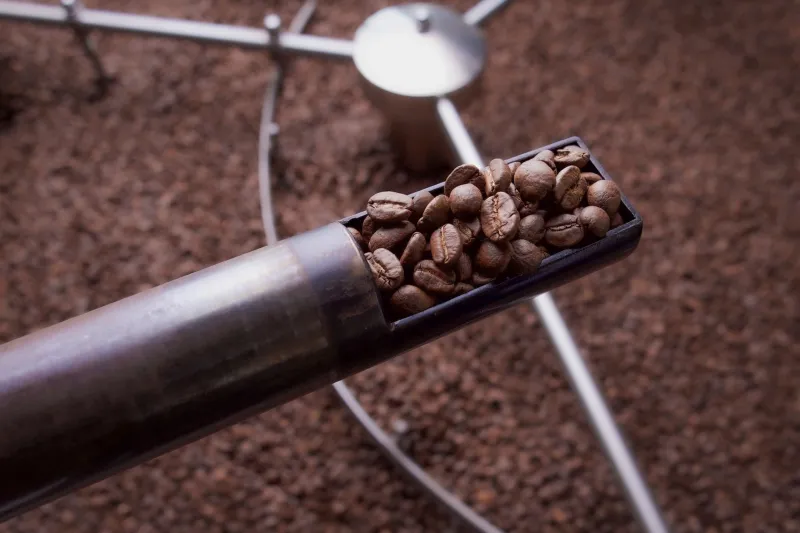
After processing, green (unroasted) coffee makes its way to roasters — and Taipei has developed a genuinely strong community of independent roasters who take Taiwanese-grown beans seriously.
Smaller roasters in the city often work with micro-lots, buying small quantities from specific farmers and roasting them in ways designed to highlight rather than mask their origin character. Roast profiles for Taiwanese specialty coffees tend toward the lighter end — enough development to bring out sweetness and complexity, but not so dark that the origin character disappears into generic roast flavor.
Some cafés roast their own beans on-site, which means the gap between roast and brew can be measured in days rather than weeks. For coffee, freshness matters more than most people realize. CO2 released from recently roasted beans affects extraction, and flavor degrades with time. When you're drinking Taiwanese coffee in Taipei, there's a good chance it's fresher than almost anything you'd find stateside.
What This Means When You're Actually Ordering
None of this has to be overwhelming when you're standing at a café counter trying to figure out what to order. A few simple questions can unlock a lot.
Ask where the beans are from. A good barista will tell you the region, the farm if they know it, and the processing method. Ask what the barista recommends for someone who normally drinks X. Most specialty cafés in Taipei are genuinely happy to talk through this — it's not pretentious gatekeeping, it's enthusiasm.
If a café offers a flight or a tasting option — some do — take it. Tasting two or three single-origins side by side is one of the fastest ways to understand how elevation and processing translate to actual flavor differences.
And if you find a bag you love, buy it. Taiwanese specialty coffee is still relatively hard to source in the US, and bringing some home is one of the better souvenirs you can pack in a carry-on.
The Bigger Picture
The coffee in your Taipei café cup is the end point of a chain that starts with a farmer deciding which varieties to plant on a specific slope at a specific altitude, moves through months of careful cherry development, a few days of processing, a drive to the city, time in a roaster, and finally lands in the hands of a barista who has probably tasted it dozens of times before you ever walked in the door.
That's not a chain you can fully appreciate in a single visit. But knowing it exists changes something about the experience. The cup gets heavier in a good way. It means more. And honestly, it usually tastes better too.