More Than Milk and Foam: What Taipei's Baristas Are Actually Saying When They Hand You That Cup
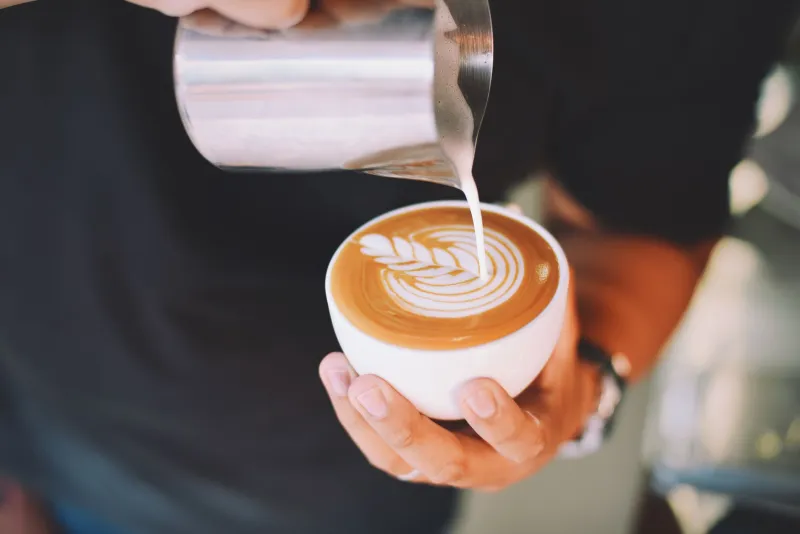
You've seen it a hundred times. The barista slides a cup across the counter, and there's something sitting on top of the espresso — a rosette, a tulip, maybe a swan if you got lucky. You snap a photo. You drink it. End of story.
Except in Taipei, it's rarely the end of the story.
Walk into the right café in Da'an or Zhongshan, and the latte art you receive isn't just a flex of technical skill. It's closer to a signature — a small, deliberate statement about where that barista trained, what they value, and sometimes, what they think of you as a customer. Once you start seeing it that way, you can't unsee it.
The Basics Are Not Actually Basic Here
American coffee drinkers are pretty familiar with the standard latte art repertoire. Rosettas and hearts show up at every third-wave café from Portland to Nashville. They're impressive, sure, but they've also become wallpaper — expected rather than noticed.
Taipei's specialty scene absorbed those foundational techniques years ago and kept going. What you'll find at shops like those clustered around Yongkang Street or tucked into the quieter lanes of Xinyi isn't just cleaner execution of familiar patterns. It's a genuinely different visual vocabulary.
Free pour — the technique where the barista shapes the design purely through the movement of the pitcher — gets pushed to extremes here. Baristas train for years on micro-movements that produce layered petals with almost architectural precision. The contrast between the dark espresso crema and the white milk foam isn't just aesthetic; experienced baristas use it like ink on paper, controlling depth and shading in ways that take serious time to develop.
Etching, where a barista uses a fine tool to draw into the foam after the pour, is common too — but in Taipei, it often goes well beyond the smiley faces and simple animals you'd find at a tourist-friendly café. At higher-end spots, etched designs can take the form of landscapes, abstract patterns, or references to Taiwanese cultural motifs that carry real meaning for the person drawing them.
What the Design Is Actually Telling You
Here's the part that tends to surprise American visitors: in Taipei's more serious café culture, the design you receive can function as a kind of informal communication.
A clean, symmetrical rosette from a barista who barely looked up from the machine is one thing. But a barista who makes eye contact, asks a question or two about what you're in the mood for, and then produces something specific? That's a different interaction entirely. Some regulars at Taipei cafés describe the experience of watching a barista choose a design in the moment as oddly personal — like being read, just a little.
This isn't universal across every café in the city, and it would be a stretch to say every barista is operating with this kind of intentionality. But the culture around craft and presentation in Taipei's specialty scene is serious enough that the best baristas think about the whole experience of handing someone a drink — including what it looks like when it lands.
A few baristas interviewed for this piece described learning to match the complexity of a design to the pace of a customer's visit. Someone settling in for an hour with a laptop gets something considered and detailed. Someone clearly on their way out gets something fast and clean but no less technically sound. The art communicates care, even when words don't make it across the language barrier.
Where East Meets West in the Cup
Taipei's latte art culture didn't develop in isolation. The city's baristas have competed internationally, trained in Australia and Japan, and brought techniques back home to blend with local sensibilities. That cross-pollination shows.
Japanese influence is particularly visible. The precision and restraint that characterizes Japanese coffee culture — the idea that every element of a drink should be exactly right, nothing more — has shaped how many Taipei baristas think about presentation. Less is often more. A single, perfectly executed tulip can say more than an overly complicated etching that loses its edges by the time it reaches the table.
At the same time, there's a warmth in the interaction that feels distinctly Taiwanese. Hospitality here isn't formal or distant. Baristas in Taipei tend to be genuinely engaged with the people they're serving, and that shows in how they present a drink — with attention, with a moment of pause, sometimes with a quiet comment about what they made and why.
For American visitors used to calling their name being shouted across a counter, this can feel like a genuinely different register of service.
The Competition Circuit and What It Produces
Taiwan takes latte art competition seriously. The World Latte Art Championship has featured Taiwanese competitors consistently, and the domestic competition circuit — which draws baristas from shops across Taipei and beyond — functions almost like a farm system for developing elite-level technique.
What that means practically, for anyone walking into a well-regarded café in the city, is that the person making your drink may have spent months practicing a single pour motion. The skill floor is high. Even at spots that don't advertise themselves as specialty destinations, you'll encounter baristas who have put in the kind of repetitive practice that produces real mastery.
That context matters when you're looking at your cup. The design you're holding isn't the result of someone following a tutorial. It came out of a culture that genuinely prizes this as a craft worth developing over years.
How to Actually Look at Your Latte
If you're planning a trip to Taipei and want to engage with this part of the café culture more intentionally, a few things are worth knowing.
First, sit down. Latte art is designed to be seen in a still cup, and the walk from counter to table matters less than you'd think — a good barista accounts for that. Take a second before you drink to actually look at what's in front of you.
Second, it's okay to ask. Most baristas in Taipei who work at specialty cafés have at least conversational English, and even a brief question about a design — what it is, how they learned it — tends to open up a real exchange. These are people who care about what they do and respond well to genuine curiosity.
Finally, pay attention to the variation between cafés. The same rosette poured at three different shops in three different neighborhoods will tell you something about each place — the milk temperature, the espresso ratio, the speed and confidence of the pour. Start noticing the differences, and you'll find yourself with a much richer read on what makes each spot distinct.
The cup is talking. Taipei's baristas have been hoping you'd listen.