Stamped, Sipped, and Carried Home: Why Taipei's Café Passport Culture Is the Souvenir Game Nobody Told You About
There's a small booklet sitting on a shelf in a Brooklyn apartment right now. It's roughly the size of a field notebook, slightly coffee-stained along one edge, and filled with ink stamps in a dozen different shapes — a tiny mountain range, a hand-drawn espresso machine, a minimalist cat silhouette. The owner, who visited Taipei for ten days last spring, describes it as the best thing she brought back from the trip. Not the pineapple cakes. Not the tea. The stamps.
If you haven't heard of Taipei's café passport scene yet, you're about to become mildly obsessed with it.
What a Café Passport Actually Is
The concept is simple enough that it almost sounds too low-tech to matter. Certain cafés in Taipei — particularly in neighborhoods like Da'an, Zhongshan, and Yongkang — have developed their own branded stamp programs. Some shops sell or give away small accordion-fold booklets designed specifically to collect impressions from participating locations. Others have gone further, releasing limited-edition passport-style booklets with thick cardstock covers, ribbon markers, and enough interior pages to document a week-long café crawl across multiple districts.
The stamps themselves are where things get interesting. These aren't the generic ink pads you'd find at a post office. Shops commission custom-carved rubber or resin stamps that reflect their individual identity — a roaster known for its mountain-grown beans might use a ridge-line silhouette, while a café with a design-forward interior might stamp something that looks more like a gallery logo than a coffee brand. The result, once you've collected eight or ten of them side by side, starts to look less like a receipt trail and more like a piece of art.
The Psychology of Collecting Your Coffee
So what's actually going on here? Why does a stamp make a cup of coffee feel more significant?
Part of it is documentation. Americans are deeply familiar with the idea of travel as something that needs to be recorded — we photograph everything, tag locations, post stories. The café passport taps into that same impulse but gives it a physical, tactile dimension that a phone screenshot simply can't replicate. You were there. You drank that. Here's proof, and it smells faintly of espresso.
But there's also something about the scarcity built into the system. Many of the most sought-after stamps in Taipei are only available at specific locations during specific hours, or as part of seasonal promotions tied to harvest periods or local events. That limited availability turns a casual coffee stop into something closer to a mission. Visitors start planning their days around stamp availability the same way someone might plan a national park trip around a Junior Ranger badge program — which, if you think about it, is exactly the same psychological loop.
Shop owners are well aware of this dynamic. One café owner in the Zhongshan district, who asked to be identified only by her shop's name, described the passport program as "the best marketing tool we never had to advertise." Her shop's stamp — a detailed illustration of their rooftop garden — gets photographed and shared on social media dozens of times a week by visitors who want to show off their collection. The stamp does the advertising. The coffee keeps them coming back.
Limited-Edition Merchandise and the Escalation of Exclusivity
For some shops, stamps were just the beginning. A handful of Taipei cafés have expanded their collectible ecosystems into full merchandise lines: tote bags, enamel pins, ceramic cups, and even zines that document the neighborhood around the café rather than the café itself. One well-known spot near Taipei Main Station releases a new postcard set every season, illustrated by a rotating cast of local artists, available only to customers who purchase a drink.
The logic is clever. You're not just buying a latte — you're buying access to a limited print run. Come back next season, and there's a new one waiting. The café becomes less of a place you visit once and more of a subscription you maintain across multiple trips.
This approach has been particularly effective with repeat visitors and with the growing segment of travelers who build entire Taipei itineraries around café culture. Online communities dedicated to Taipei coffee — on Reddit, on travel forums, in dedicated Instagram accounts — regularly feature posts from visitors comparing their passport collections, trading tips on which shops have the most distinctive stamps, and asking for advice on how to fit six specific cafés into a single afternoon in Yongkang.
What Shop Owners Say About Building for Collectors
Not every café owner got into the stamp game intentionally. Several describe it as something that evolved organically — a customer asked for a stamp, they had one made, and suddenly there was a line of people specifically asking about it.
But the shops that have leaned in most deliberately tend to share a few things in common. They think hard about design consistency: the stamp, the packaging, the cup sleeves, and the take-home merchandise all feel like they belong to the same visual world. They also tend to be intentional about scarcity — releasing new stamps or merchandise in small batches rather than keeping the same items available indefinitely.
One roaster in the Da'an neighborhood described the process as "building a language" around the café. Every element — the stamp, the bag the beans come in, even the receipt — is part of a coherent identity that customers can take home and point to as a piece of that place. "When someone opens their booklet and shows their friends, I want them to be able to tell a story about us just from looking at the stamp," she said. "That's the goal."
How to Actually Do This as a Visitor
If you're heading to Taipei and want to get into the passport scene, the easiest starting point is to simply ask at the first café you visit whether they have a stamp program. Many shops that participate in city-wide or neighborhood-wide initiatives will have information about other participating locations nearby.
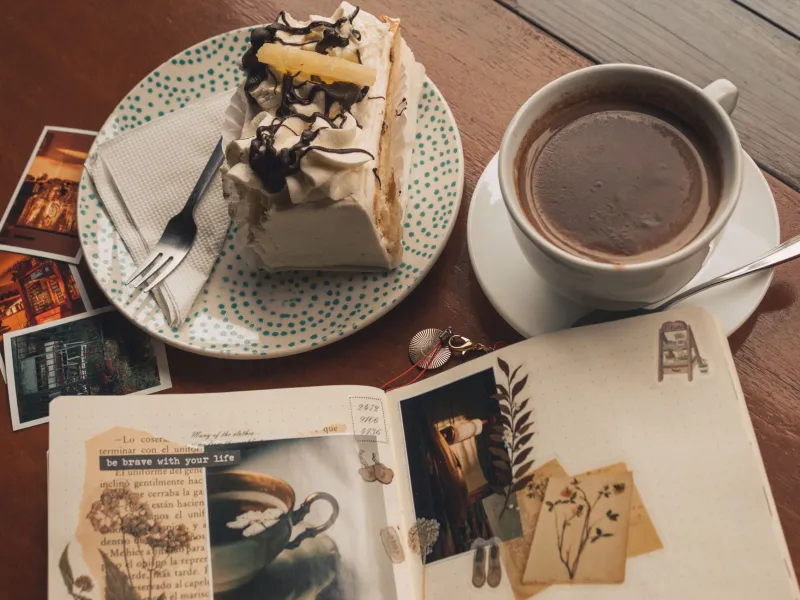
Bring a dedicated notebook if you don't want to buy a branded passport booklet — plenty of visitors use a simple Moleskine or Field Notes journal and get stamps wherever they can find them. The stamps will adhere to almost any paper stock, and the visual contrast between your handwritten notes and the café's custom design actually adds to the charm.
Also: don't rush it. The best part of the passport culture in Taipei is that it naturally slows you down. You have to sit, order, drink, and then ask for the stamp. That rhythm — café by café, neighborhood by neighborhood — ends up being the actual souvenir. The booklet is just how you prove it happened.
And honestly? That slightly coffee-stained booklet on a Brooklyn shelf probably tells a better story about Taipei than any photograph ever could.