Same Table, Same Order, Same Smile: How Taipei's Cafés Became Home for the People Who Never Left
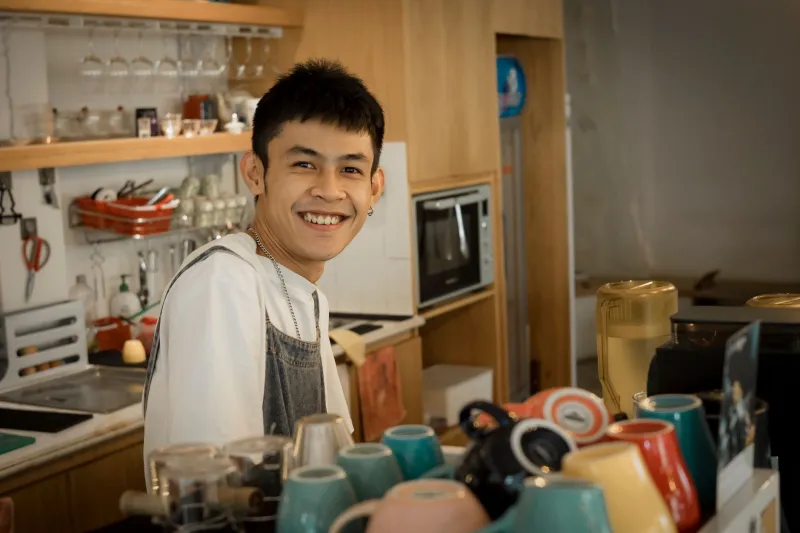
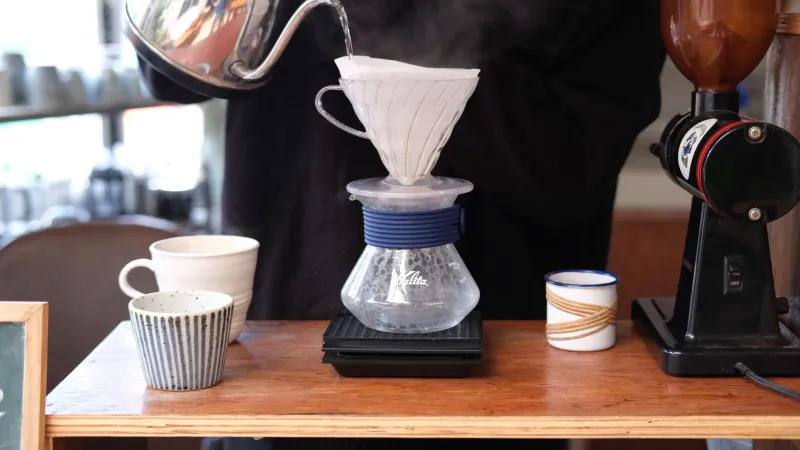
Walk into the right café in Taipei's Da'an District on a Tuesday morning, and you'll notice something that doesn't quite compute if your coffee experience has been shaped by American chains. A man in his sixties is already seated at a corner table before the doors officially open. The barista doesn't ask his name. She doesn't ask what he wants. She just nods, turns toward the machine, and a few minutes later sets down a cup of medium-roast pour-over without a word exchanged. He opens his newspaper. She moves on.
This is not a loyalty app transaction. This is something older and quieter than that.
The Architecture of Belonging
Taipei's café culture didn't stumble into this dynamic by accident. It was built slowly, over decades, through a combination of neighborhood density, unhurried social norms, and a genuine café philosophy that treats lingering as a feature rather than a problem to manage. In a city where apartments are often small and street life is constant, the local café fills a specific structural role — it's the third place that American urban planning keeps trying and failing to create.
For regulars, that role becomes deeply personal. We're not talking about someone who stops in three times a week for a cold brew. We're talking about people whose presence is so consistent that staff notice when they're absent. People whose preferred seat — by the window, near the outlet, facing the street — is quietly left open out of unspoken habit. People whose order is started the moment they walk through the door.
This is the social architecture that Taipei's cafés have quietly perfected, and it runs on something American coffee culture largely traded away when it optimized for speed and scale.
The Expat Who Never Planned to Stay
Talk to any long-term expat in Taipei and somewhere in the conversation, a café will come up. Not as a place they visited once, but as a place that became a fixed point in their week. A Canadian graphic designer who relocated for a tech job and never left describes his regular spot in Zhongzheng as "the place I go to feel like myself when I'm between worlds." He's been going to the same café for six years. The owner knows about his divorce, his freelance pivot, and his ongoing argument with himself about whether to apply for permanent residency.
"In Seattle, I used to go to the same Starbucks every day for two years," he says. "Nobody ever knew my name. I was just a mobile order."
That contrast isn't just anecdotal. It points to something structural about how American coffee chains were designed. The entire model — standardized product, fast turnover, digital ordering — was engineered to remove friction. But in removing friction, it also removed texture. The small talk. The memory. The sense that someone behind the counter actually registers that you exist as a person with a history.
Retirees, Remote Workers, and the Art of the Long Morning
The regular phenomenon in Taipei cuts across demographics in ways that would surprise most American coffee drinkers. It's not just young remote workers with laptops and noise-canceling headphones. It's retired couples who treat a specific café table as their morning living room. It's neighborhood grandmothers who come for the milk tea and stay for the conversation. It's freelancers who've essentially set up a second office with better natural light and a more interesting view than anything they could afford to rent.
In Taipei's Wenshan District, one café owner describes her regulars as "a small village that happens to meet inside my shop." She knows which retiree takes his coffee with less water. She knows which remote worker needs the corner outlet by 9 a.m. or her whole morning is thrown off. She knows which couple always orders separately even though they've been married for thirty years.
This isn't customer service in the American performance sense — the scripted greeting, the upsell, the have-a-great-day. It's something closer to genuine familiarity, built up over hundreds of small interactions that nobody explicitly chose to have but that accumulated into something real.
What American Coffee Culture Got Wrong
It's worth being specific about what the comparison reveals, because it's not simply that American cafés are cold and Taipei cafés are warm. The difference is more structural than that.
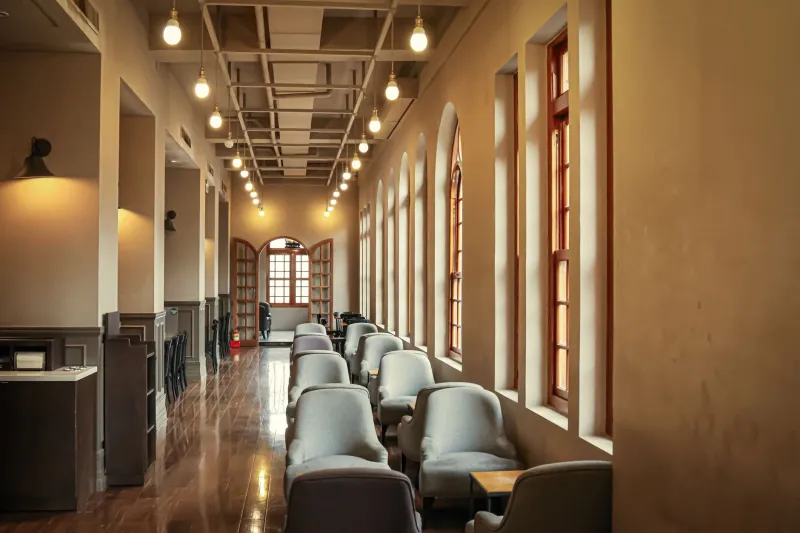
American coffee chain culture was built around the commute. Get in, get caffeinated, get out. The physical design of most U.S. chains reinforces this — hard chairs, minimal tables, layouts that discourage settling in. Even the language of the industry reflects it: "grab a coffee," "quick stop," "on the go."
Taipei cafés, particularly the independent neighborhood spots that make up the real backbone of the city's coffee scene, were built around the opposite assumption. The coffee is something you stay for. The space is designed to hold you. And over time, if you keep coming back, the place begins to hold you in a different sense — it holds your habits, your preferences, your story.
For American expats especially, discovering this dynamic can feel almost disorienting. You walk in expecting a transaction and walk out having had, without quite planning it, a conversation that makes you feel less like a stranger.
The Quiet Social Contract
None of this is formal. There's no program, no membership tier, no points system that explains why the barista at a café in Xinyi already knows you take your Americano with a splash of cold water before you've said a word. It's just attention, accumulated over time, expressed through small consistent acts.
That's what makes it hard to replicate and easy to miss until you've experienced it. Regulars in Taipei don't describe their café relationships in terms of perks or benefits. They describe them in terms of comfort. Of being somewhere that knows them. Of a chair that feels like it belongs to them even though it technically doesn't.
For a lot of people — expats navigating the low-grade alienation of living abroad, locals building a life in a dense and sometimes impersonal city, retirees looking for somewhere to put their mornings — that feeling of being known is not a small thing.
It turns out a cup of coffee can carry a lot more than caffeine. In Taipei, the best ones carry something closer to a relationship. And the people who've found their table aren't in any particular hurry to give it up.