Why Remote Workers Are Packing Up and Moving to Taipei (Hint: The Coffee Is Just the Beginning)
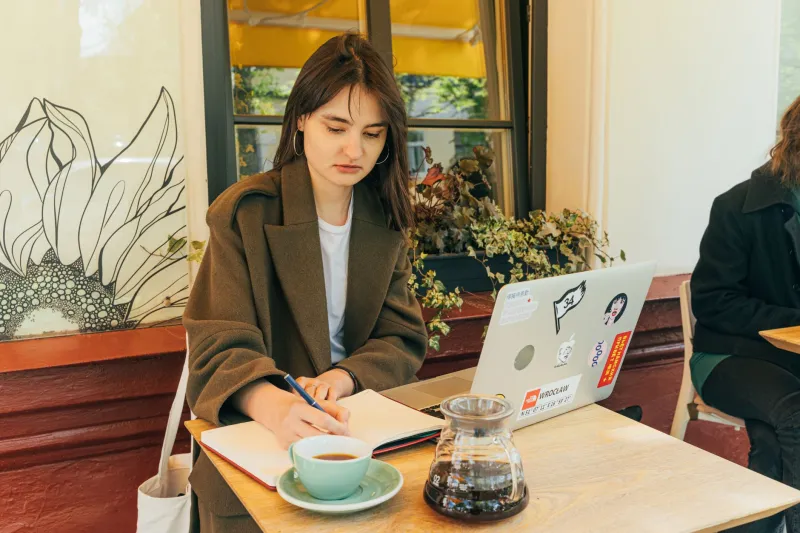
Somewhere between the third Zoom call of the morning and a perfectly pulled single-origin pour-over, Sarah Mendez made a decision. She was sitting in a sunlit café in Taipei's Da'an District, her laptop open, her cup full, and absolutely no one rushing her to leave. Six months later, she gave up her San Francisco apartment and moved to Taiwan full-time.
"I kept waiting for it to feel weird," she says. "It never did."
Sarah isn't an outlier anymore. Across remote work forums, expat Facebook groups, and digital nomad Slack channels, a pattern is emerging: Americans with location-flexible jobs are landing in Taipei, falling hard for its café culture, and quietly deciding not to go home. This isn't the story of a trendy city having a moment. It's something slower and more structural — a rethinking of what a working environment is actually supposed to feel like.
The Café as Office, But Better
Let's be direct about something: Taipei's cafés are objectively excellent places to work. Not in the grudging, "I guess this will do" way of a laptop-friendly American chain, but in a way that feels almost deliberately designed for sustained productivity.
Most cafés here offer reliable high-speed WiFi as a baseline expectation, not a selling point. Outlets are abundant. Tables are sized for actual use. The ambient noise hits that sweet spot — busy enough to stimulate, quiet enough to concentrate. And crucially, the culture around lingering is completely different. In most American coffee shops, there's an invisible timer ticking from the moment you sit down. In Taipei, that pressure simply doesn't exist in the same way. Order a coffee, settle in, stay for three hours. Nobody's side-eyeing you.
For remote workers accustomed to fighting over the two outlets near the window at their local café back home, this is genuinely disorienting at first. "I kept expecting someone to ask me to order something else or move," admits Marcus Chen, a UX designer from Austin who relocated eight months ago. "It took me two weeks to stop being defensive about it."
What the Numbers Actually Look Like
For Americans doing the mental math, the cost-of-living comparison is where things get interesting. Taipei consistently ranks as one of Asia's most affordable major cities for expats, and the gap with US metros is significant.
A comfortable one-bedroom apartment in central Taipei — close to MRT lines and, yes, the best café neighborhoods — typically runs between $700 and $1,100 USD per month. Compare that to comparable urban living in Austin ($1,800+), Seattle ($2,200+), or New York (don't ask). A specialty coffee drink at a well-regarded Taipei café averages around $3 to $5. A full lunch at a nearby noodle shop might cost $3 to $4. The math compounds quickly.
Healthcare costs through Taiwan's National Health Insurance system are another factor remote workers frequently mention — visitors on certain visa types can access coverage, though the specifics depend on residency status and length of stay.
Navigating the Visa Question
This is where things get practical, and it's worth being clear: the visa situation is genuinely evolving, and anyone making this move should verify current regulations independently.
For many Americans, the starting point is the 90-day visa-exempt entry, which allows for an initial exploratory period. Those looking to stay longer have increasingly looked at Taiwan's Gold Card program — officially the Employment Gold Card — which offers a combined work permit, residence visa, and alien resident certificate for qualified professionals in fields including technology, finance, arts, and more. Salary thresholds and qualification criteria apply, and the application process is handled online through a dedicated government portal.
Some remote workers have also explored visitor extensions, though this approach has limitations and shouldn't be relied upon as a long-term strategy. The bottom line: Taipei is increasingly accessible, but the legal pathway requires homework.
What People Are Actually Finding
Beyond the financial calculus and the excellent espresso, what keeps Americans in Taipei is harder to quantify. Remote workers who've made the move consistently describe a quality of daily life that catches them off guard.
"I thought I was moving for the work setup," says Jordan Park, a content strategist from Portland who arrived fourteen months ago. "What I didn't expect was how safe it feels, how easy it is to get around, how genuinely friendly people are. And then I'd end my workday at some incredible café and walk home through a night market. It stopped feeling like a tradeoff pretty quickly."
The café ecosystem itself functions almost as social infrastructure for this community. Regular spots become informal coworking hubs where remote workers recognize each other, share recommendations, and occasionally collaborate. Baristas learn orders. Owners remember faces. The transactional nature of the American coffee shop experience — in, out, back to your silo — gives way to something that feels more like membership.
The Honest Part
It would be dishonest to present this as a frictionless upgrade. Language remains a real barrier for Americans who haven't studied Mandarin, particularly outside of tourist-heavy areas. The subtropical climate — hot and humid from spring through fall, with a typhoon season that's not theoretical — takes adjustment. And the distance from family and American social networks is a genuine cost that no amount of good coffee fully offsets.
"I miss my people," Sarah says plainly. "That's real. But I also work better, live more comfortably, and feel less stressed on a daily basis than I did in the Bay Area. It's not a perfect trade. It's just the trade I made."
For a growing number of Americans with the flexibility to make that trade, Taipei's cafés aren't just a nice place to work. They're the reason the city makes sense as a home.