Open Notebook, Full Cup: Why Taipei's Cafés Are Where American Creatives Finally Get Their Best Work Done
Jessica Huang arrived in Taipei with a half-finished manuscript, a serious caffeine dependency, and zero expectations. She'd tried the whole American coffee shop routine — the standing desk at Blue Bottle, the corner booth at her neighborhood indie roaster, the obligatory oat milk latte she'd nurse for two hours while pretending to write. Nothing stuck. Three weeks into a Taipei stay that was supposed to last ten days, she'd finished four chapters.
"I kept waiting for someone to hover," she says, laughing. "Like, that thing where you can feel the staff wanting your table. It never happened. Nobody cared how long I sat there. And somehow that made me care more about actually working."
Jessica isn't alone. Among the growing community of American expats, digital nomads, and short-term visitors who've found themselves lingering in Taipei's café scene, a quiet consensus has formed: something about these spaces unlocks creative focus in a way that's genuinely hard to explain and almost impossible to replicate back home.
The Pressure That Isn't There
Walk into almost any mid-range American coffee shop during peak hours and you'll feel it immediately — a low-grade social anxiety humming beneath the surface. Are you taking up too much space? Should you buy something else? Is that person waiting for your outlet? The American café, for all its aesthetic ambition, has quietly become a place optimized for throughput, not thought.
Taipei operates on a different frequency. The culture around café-sitting here is genuinely relaxed in a structural sense, not just a vibe. Many establishments charge a minimum spend rather than enforcing time limits, and that one transaction — a pour-over, a cold brew, a slice of something — grants you an unspoken social license to stay as long as your work demands. The transaction is complete. The pressure dissolves.
For creatives who spend their most productive hours anxious about whether they're allowed to be somewhere, this is a revelation.
What the Space Is Actually Doing
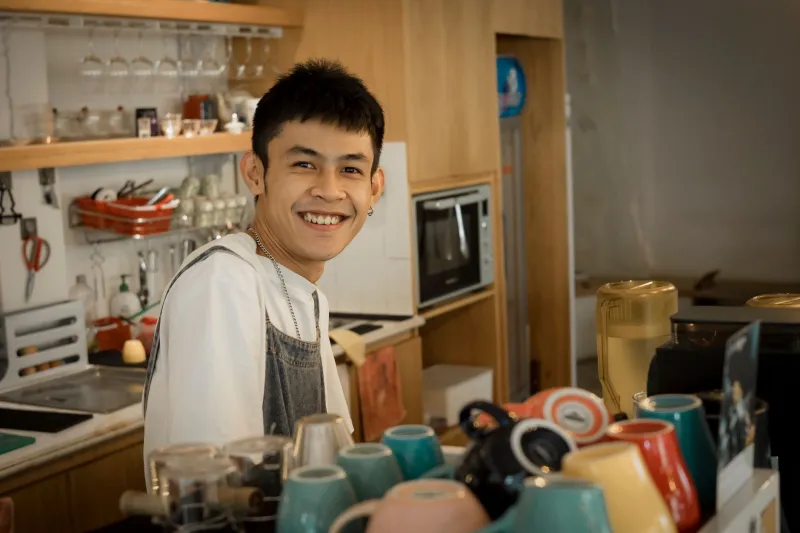
Taipei's cafés tend to be smaller than their American counterparts, and that compression does something interesting to the room. You're close enough to other people to feel the ambient energy of collective focus — the soft tapping of keyboards, the occasional murmur of conversation, the sound of coffee being prepared — without being close enough to get pulled into anyone else's world.
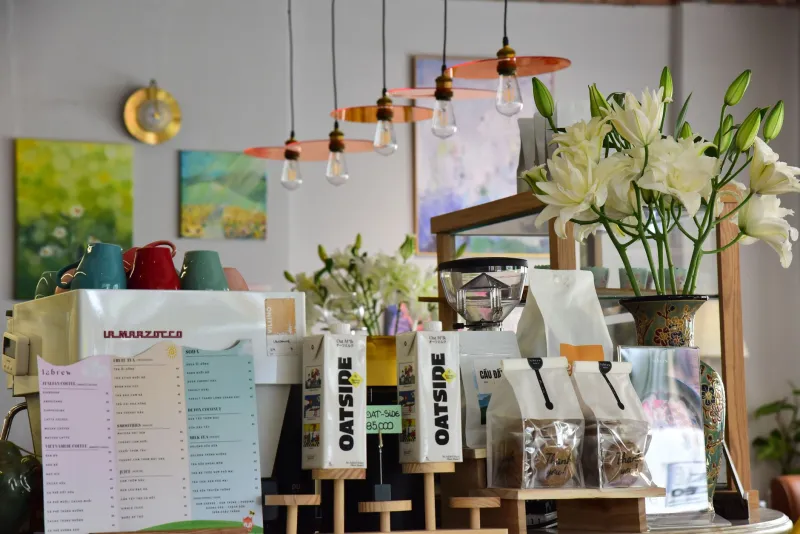
Mark Delgado, a freelance illustrator from Portland who spent three months working out of Da'an District cafés, describes it as "productive white noise with better lighting." He's not wrong about the lighting. A striking number of Taipei cafés invest seriously in their visual environment — warm fixtures, thoughtful natural light, surfaces that photograph well but also, crucially, feel good to sit in for hours. The aesthetics aren't performative. They're functional.
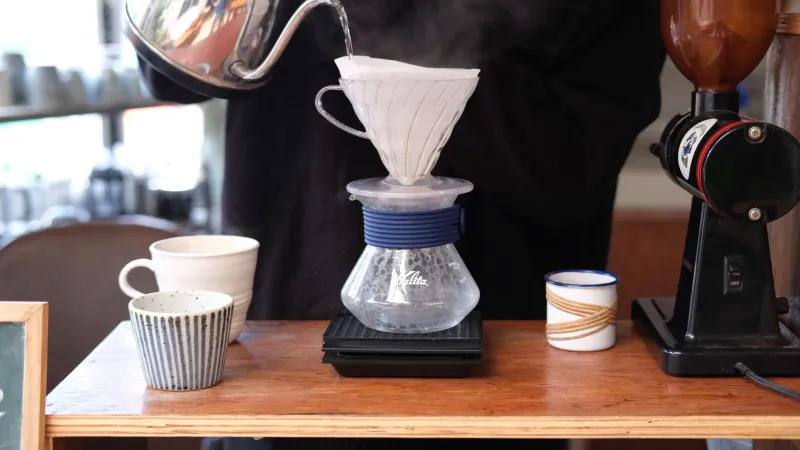
Then there's the architecture of the menus themselves. A good Taiwanese café doesn't rush you through a decision. The coffee is treated with enough care that the act of ordering becomes a small, intentional moment — and that intentionality tends to carry over into whatever you sit down to work on.
The Locals Set the Tone
One thing visiting creatives consistently mention is how the local regulars behave. In a lot of American cities, the coffee shop laptop crowd has developed a reputation for aggressive noise-canceling headphones and territorial body language. In Taipei, the working culture inside cafés feels more communal without being intrusive. People acknowledge each other without demanding anything. The space belongs to everyone and no one at the same time.
Sarah Chen, an American screenwriter who relocated to Taipei's Zhongshan District two years ago, says watching local writers and students work changed how she thought about her own creative practice. "There's no performance of productivity here," she says. "Nobody's setting up their laptop so the screen faces the door. People are just... working. And it made me realize how much energy I used to waste performing the idea of being a writer instead of actually writing."
That distinction — between performing work and doing it — comes up repeatedly in conversations with American creatives who've spent serious time in Taipei's café culture.
Neighborhoods Shape the Work
Not all Taipei cafés produce the same creative energy, and experienced visitors quickly learn to match the neighborhood to the project. Yongkang Street's dense cluster of independent spots tends to attract a literary crowd — quieter, more contemplative, ideal for long-form writing. The cafés scattered through Songshan's converted warehouses draw designers and visual artists who need space to spread out. Shida, with its university-adjacent energy, buzzes with a younger creative crowd that somehow manages to be both lively and focused simultaneously.
This geographic specificity matters. Part of what makes Taipei's café scene so generative for creative work is that it isn't monolithic. You can dial in the exact atmospheric conditions your project needs by simply walking a few blocks in the right direction.
What Americans Keep Getting Wrong
For all the enthusiasm, there's a learning curve. American visitors sometimes arrive with the same transactional mindset that makes US coffee shops feel exhausting — treating the café as a productivity station, racing through their to-do list, checking the time. The irony is that this approach tends to produce worse creative work in an environment specifically designed to support the slower kind.
The creatives who get the most out of Taipei's café culture tend to be the ones who let themselves arrive without an agenda. They order something they're genuinely curious about. They look around. They let the space do its thing before they start demanding things of themselves.
Mark puts it plainly: "The best work I did in Taipei happened on days when I walked in with no plan and just started drawing whatever was in front of me. The café gave me permission to be unproductive for a few minutes, and then suddenly I was three hours deep into something good."
A Different Kind of Writers' Room
What Taipei's cafés have quietly become — for locals and visiting creatives alike — is something American cities have largely failed to build: a third space that genuinely accommodates the rhythm of creative work. Not a co-working space with a coffee bar bolted on. Not a library with better espresso. Something more organic than either.
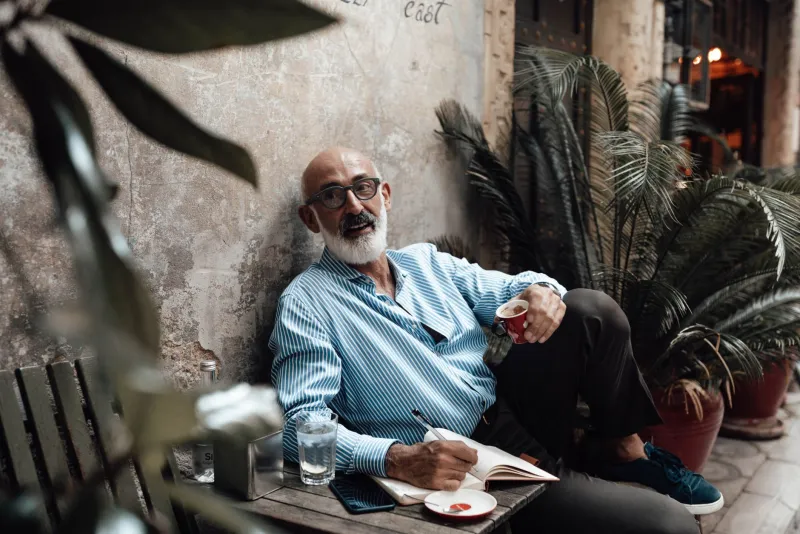
The notebook comes out here not because the café demands it, but because the café makes it feel natural. The city hums along outside. The cup stays warm longer than it should. And the chapter that's been stuck for three weeks starts, finally, to move.
Jessica finished her manuscript in Taipei. She's already planning her next trip back.