Night Owls, Early Risers, and Everyone In Between: How Taipei's Cafés Never Really Close
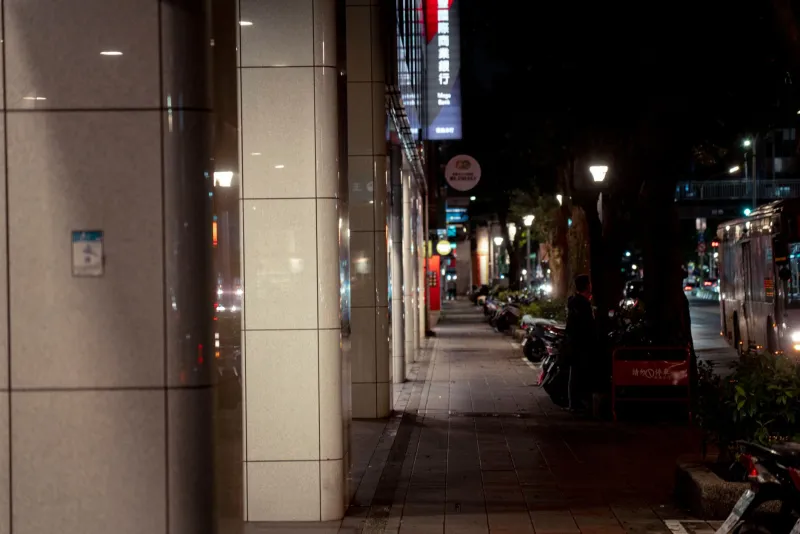
Here's something that will recalibrate your understanding of coffee shop culture pretty quickly: it's 11:30 on a Tuesday night in Taipei, and the café you just walked into is full. Not winding-down full. Actually full — occupied tables, a line at the counter, the low hum of laptop fans and conversation mixing with whatever's playing softly through the speakers. Nobody looks like they're about to leave.
If you've spent most of your coffee life in the United States, where the default closing time hovers somewhere around 6 or 7 p.m. and working from a café past 9 feels vaguely transgressive, this takes some adjusting to. But spend a few days moving through Taipei's neighborhoods at different hours, and a picture starts to emerge — one where the café isn't just a place to grab a drink, but a kind of civic infrastructure that bends itself to the shape of the city's actual rhythms.
Xinyi in the Morning: Coffee as Business Tool
The Xinyi District, Taipei's financial and commercial center, does mornings with a particular kind of intensity. By 7:30 a.m., the cafés around the Taipei 101 corridor are already running at full capacity — not with tourists lining up for a photo, but with professionals conducting what are clearly working breakfasts. Laptops open, documents spread across tables, small groups leaning in over flat whites and talking in the focused, clipped way of people with somewhere to be at nine.
The cafés here tend to reflect their clientele: clean lines, reliable Wi-Fi, and menus that don't require too much decision-making before the first cup. But even in this more corporate context, quality matters. Espresso is taken seriously. You won't find the kind of burnt, forgettable office-building coffee that passes for acceptable in a lot of American business districts.
"Our customers are busy, but they still notice when the coffee is good," says the manager of a mid-sized café near one of the district's major office towers. "They come back every morning. If the coffee isn't consistent, they find somewhere else. We don't take that for granted."
Ximen Afternoons: Students, Screens, and Long Stays
Cross the city to Ximen — younger, louder, full of the particular energy that comes from being the neighborhood where Taipei's teenagers and university students congregate — and the café culture shifts dramatically. The afternoon crowd here isn't rushing anywhere. They're settling in.
Ximen's cafés function openly and unapologetically as study spaces and social living rooms. Tables are occupied for three, four, five hours at a stretch. Nobody gets side-eyed for nursing a single iced Americano through an entire afternoon of exam prep. The social contract is different here, and café owners have largely accepted — even embraced — their role as providers of affordable, comfortable, semi-public space.
This is one of the clearest contrasts with typical American coffee shop culture, where the pressure to turn tables is real and "laptop limits" or time restrictions aren't uncommon. In Taipei, especially in student-heavy neighborhoods, the long stay is basically the business model. A student who spends four hours in your café and orders twice is a good customer, full stop.
"We designed the seating specifically so people could stay," explains the owner of a popular Ximen spot that fills up daily with students from nearby universities. "Comfortable chairs, good lighting for reading, enough outlets. If someone stays all afternoon, that means they like it here. That's what we want."
The Neighborhoods You Might Miss
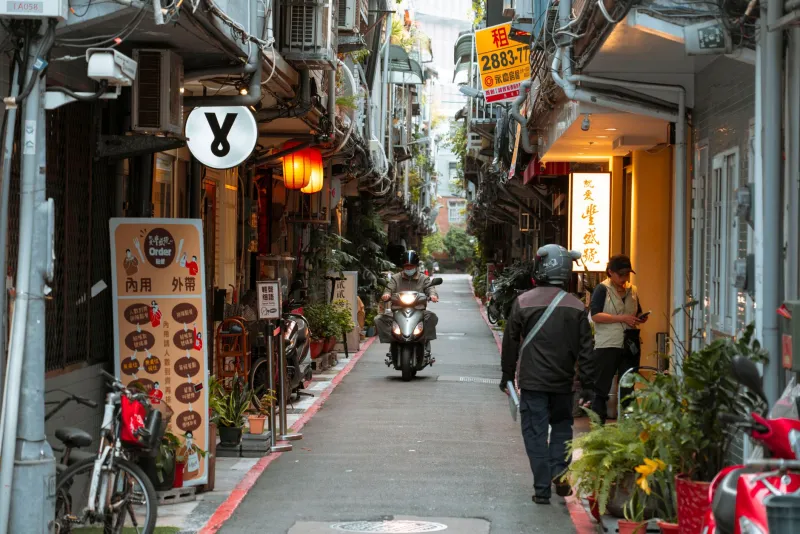
Beyond the obvious districts, some of Taipei's most interesting café culture happens in neighborhoods that don't show up on most tourist itineraries. Areas like Xinsheng South Road, parts of Wanhua, and certain blocks in Zhongzheng have developed their own micro-scenes — smaller, quieter, and often more experimental than the high-traffic spots.
These are the places where you're more likely to find a roastery running a pop-up tasting on a Thursday evening, or a café that doubles as a gallery space for local artists, or an owner who used to work in Tokyo and brought back specific ideas about hospitality and spatial design. The crowds are smaller, the vibe is less self-conscious, and the coffee is often excellent precisely because there's no tourist traffic to coast on.
For American visitors who've done the obvious spots and want to go a little deeper, these neighborhoods reward the kind of wandering that Taipei's compact, walkable layout makes genuinely easy. Get on the MRT, pick a stop you don't recognize, and start walking.
Midnight and Beyond: The Creative Hours
And then there's late night. This is where Taipei's café culture most dramatically parts ways with what most Americans are used to. In the quieter back streets of several districts, there are cafés that don't hit their stride until after 10 p.m. — spaces that attract designers, writers, musicians, and the generally nocturnal creative types who need somewhere to work that isn't their apartment.
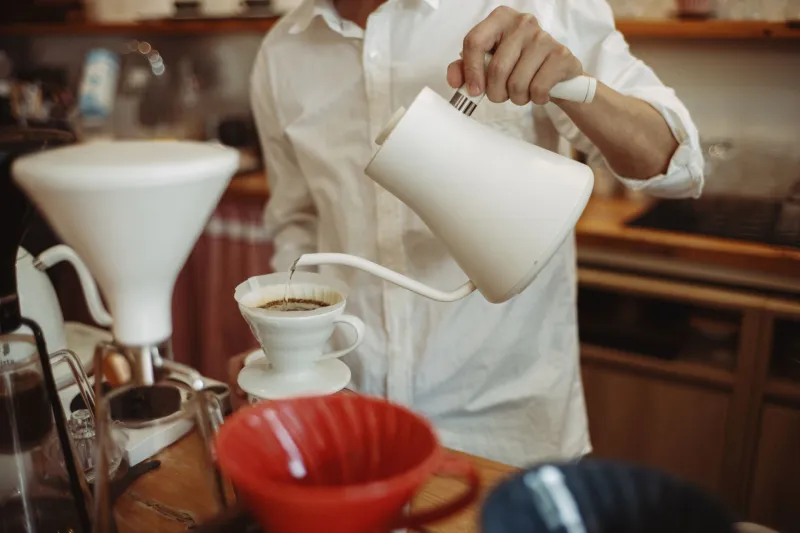
The atmosphere at these spots is distinct: lower lighting, slower service (in a deliberate, unhurried way), music that's been thought about rather than defaulted to. The coffee is often more adventurous — single origins, cold brew variations, occasional pour-over service even at midnight because the person behind the bar actually wants to make it.
"Taipei people work late, stay up late, think late," says a regular at one such spot who describes himself as a freelance animator. "A café that closes at seven is useless to me. I need somewhere that's open when my brain actually works."
That's the thing about Taipei's café culture, taken as a whole: it's organized around people's actual lives rather than around the convenience of the business running it. For anyone coming from a city where the coffee shop is a morning-only proposition, that reorientation is genuinely refreshing. It might even make you a little jealous.
Taipei's cafés don't just serve the city's 24-hour culture. In a real way, they help create it.