What Taipei's Café Menu Is Actually Saying (A Translation Guide for the Confused but Caffeinated)
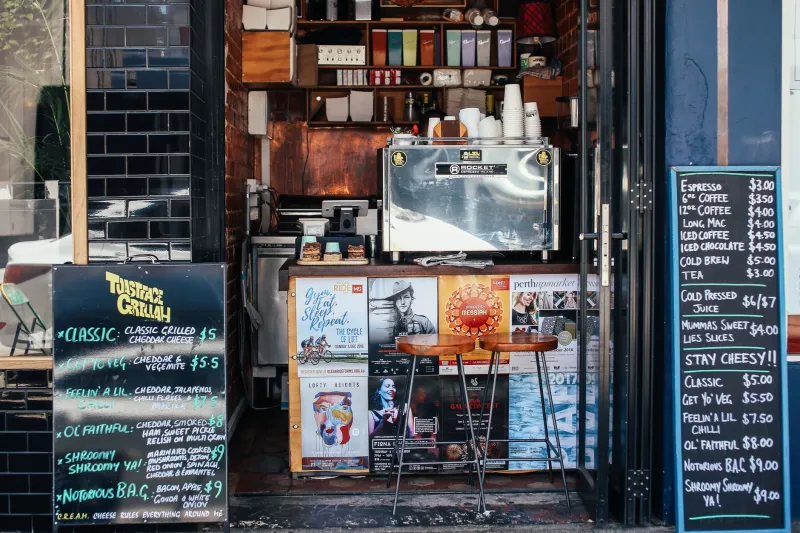
You're standing at the counter of a beautifully designed café somewhere in Zhongzheng District. The menu is a laminated A4 sheet, half in English, half in characters you can't read, and one section that appears to be entirely in a font that resembles a mood board. The barista is patient. Extremely patient. And you are holding up the line.
Welcome to one of Taipei's most underrated travel experiences: the café menu.
This is not a complaint. Taipei's café menus are genuinely interesting documents once you know how to read them. They tell you about the season, the owner's aesthetic philosophy, regional sourcing decisions, and occasionally, the barista's feelings about foam. But they do require a bit of translation — sometimes literally, sometimes culturally. Here's what's actually going on.
The Seasonal Section Is Not Decoration
Almost every serious café in Taipei maintains a rotating seasonal menu, and unlike the "limited time offer" framing you'd see at an American chain (which usually means marketing, not ingredients), these changes are often genuinely tied to what's available and fresh.
Spring menus lean toward lighter, floral preparations — you'll see osmanthus, yuzu, and passionfruit appearing as modifiers in drinks that might otherwise sound straightforward. Summer brings cooling elements: shiso, lemon grass, and cold-brew bases that have been steeping longer than you'd expect. Fall is when things get earthy and sometimes surprising, with roasted grain notes and the occasional sweet potato component that sounds bizarre until you try it.
When something is marked seasonal and you don't know what it is, the correct move is almost always to order it. The failure rate is remarkably low.
The English Translation Is Doing Its Best
Many Taipei cafés make a genuine effort to provide English descriptions, and the results range from precise to charmingly abstract. "Forest morning feeling" is a real flavor note you might encounter. So is "autumn memory," "cloudy with brightness," and the perennial classic, "very smooth."
These aren't mistranslations so much as a different philosophy about what a menu description is supposed to accomplish. Where an American café might say "notes of brown sugar, dried cherry, and cocoa," a Taipei café might describe the same drink as evoking a particular emotional state or landscape. Neither approach is wrong. One just requires you to recalibrate your expectations.
When the description genuinely baffles you, two things help: the photo (if there is one — many menus include them), and just asking. Most café staff in tourist-adjacent neighborhoods have enough English to clarify whether "midnight garden" means cold brew or something with actual herbs in it.
The Numbers Are Not Random
Pricing on Taipei café menus follows a logic that becomes clear once you see it a few times. Drinks with a minimum consumption note (消費最低) attached are telling you the floor for sitting down — not every café has one, but those that do are being upfront about it, which is actually more honest than the ambient pressure you feel in American coffee shops.
Size designations don't always map to American conventions. "Large" at some Taipei cafés is closer to a US medium. Don't assume. And ice levels — listed as less ice, normal ice, no ice, or sometimes on a numerical scale — are taken seriously. If you order "no ice" on a hot August day, you will receive a room-temperature drink. This is not an error.
The Unwritten Rules (That Everyone Else Already Knows)
Ordering at a Taipei café involves a few conventions that aren't posted anywhere but are broadly understood.
First: customization is welcomed but shouldn't be pushed to extremes. Adjusting sweetness level and ice level is completely normal. Asking for a completely off-menu construction will depend entirely on the café — specialty spots focused on single-origin pourover may politely decline; more casual milk-tea-adjacent cafés are usually flexible.
Second: the "wait for your name or number" system is universal, and the method varies. Some cafés use buzzers. Some call out a number in Mandarin. Some write your name phonetically on a cup. If you're not sure, watch what other customers do when they order and mirror it.
Third: if there's a QR code on the table, scan it before you go to the counter. Many cafés have moved to self-ordering systems, and walking up to place a verbal order when the expectation is digital can create a small but awkward moment.
The Drink Names Are Often Poetry (Literally)
Some Taipei cafés name their drinks with a literary seriousness that would feel pretentious in an American context but somehow works perfectly here. You might encounter a drink named after a line from a Taiwanese poem, a reference to a neighborhood's history, or a seasonal allusion that only makes sense if you know that a particular mountain's cherry blossoms are currently blooming.
This is worth leaning into rather than finding frustrating. A café that names a drink "the road home after rain" is telling you something about its identity and the experience it's trying to create. Even if you don't catch the reference, you're participating in a culture that takes coffee seriously as an aesthetic and emotional experience — not just a caffeine delivery system.
A Few Specific Terms Worth Knowing
For non-Mandarin speakers, a short vocabulary list goes a long way:
- 手沖 (shǒu chōng): Pour-over. This will be the slow, careful, single-origin preparation.
- 義式 (yì shì): Espresso-based. Your lattes, cappuccinos, and americanos live here.
- 冷萃 (lěng cuì): Cold brew. Distinct from iced coffee — this has been brewed cold, not chilled after the fact.
- 燕麥奶 (yàn mài nǎi): Oat milk. Available at most specialty cafés now.
- 無糖 (wú táng): No sugar. Useful to know if you prefer your coffee without the sweetness that sometimes comes standard.
You don't need to memorize all of this before you go. Half the fun of Taipei's café culture is learning it in real time, one slightly confusing but ultimately excellent drink at a time.